


 Log In
Bittersweet: Two Shaunavon-area dogs bound for Japan
Posted on September 14, 2026 by Ryan Dahlman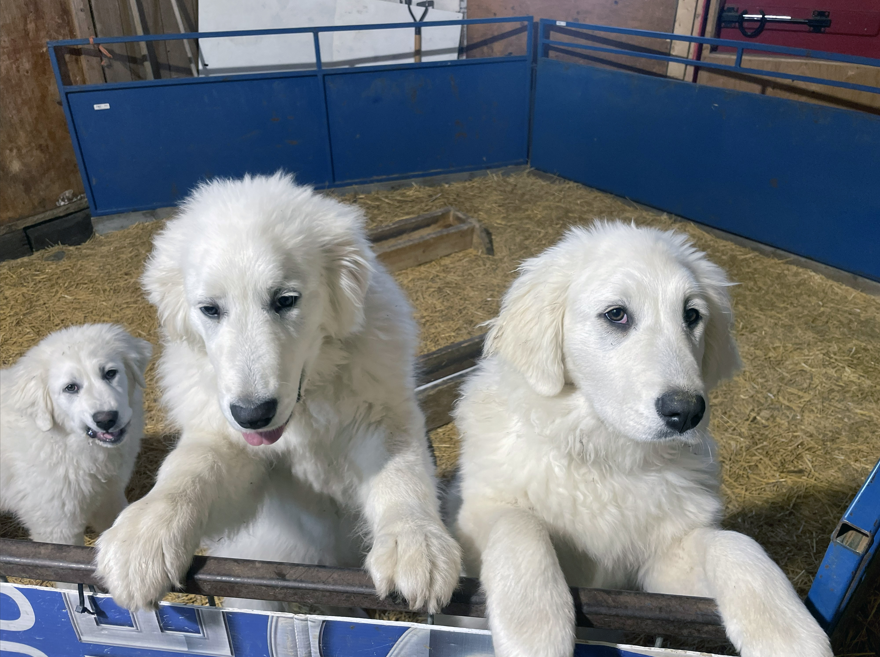
Shaunavon Standard
Two Great Pyrenees puppies born on a Shaunavon sheep farm are preparing for an extraordinary journey that will take them halfway around the world.
Born last fall among a litter of eight, the pups have spent their first months growing up alongside livestock on the sheep farm of Terry and Kathy Towle.
This month, they are scheduled to leave the Canadian prairies for a new home on a working farm in Hokkaido, located in the northernmost part of Japan.
The trip has been months in the making, the result of an unexpected international connection.
A Japanese farmer was searching for Great Pyrenees puppies to introduce new bloodlines to his breeding program. He found his answer through a mutual acquaintance – a Canadian man originally from Victoria who has lived in Japan for more than half his life. Because the man trains and competes in stock dog trials, he tapped into his network of contacts back home and learned about the Saskatchewan litter.
“He was tasked by the gentleman in Japan to find some Great Pyrenees puppies,” Terry explained.
What began as an inquiry for a single puppy eventually grew into a request for a pair: one male and one female.
Getting the puppies across the globe has required more than a little planning.
The Towles have had to work their way through some government regulations on both ends of the exchange to clear the dogs for export.
The checklist includes rabies vaccinations, microchipping, and blood testing.
Most of these protocols have been managed by local veterinarian Raphael Pineda and his team, whom the Towles praise for their expertise and assistance.
The required blood samples had to be sent to a specialized lab in Kansas City, the only facility of its kind in North America equipped for this specific international clearance.
The final hurdle is a mandatory examination by a government-certified veterinarian, which must take place within 10 days of departure to certify that the dogs are healthy and fit for travel.
“It’s a lot of work,” Terry said with a smile. “We’ve got a guidebook that you have to follow to the letter.”
In addition to their training in Shaunavon with sheep, the young dogs have been leash-trained and introduced to other dogs and people. Those skills will also help prepare them for the journey ahead.
To minimize stress, the Towles have decided to transport the pups themselves by road and trailer to Vancouver. The three-day drive will include plenty of rest stops to let the dogs stretch their legs and adjust to moving environments before their long flight.
From Vancouver, the dogs will fly to Tokyo. But the travelling won’t end there. They face another 16 hours road journey and a ferry ride to reach their final destination in Hokkaido.
For two animals that have spent their entire lives on a single quiet farm, the transition will be significant.
“They have no idea of the journey they’re about to take,” Kathy said.
In Hokkaido, the puppies will be put to work protecting sheep from local predators, which in that region happen to be bears.
The Towles, who use three Great Pyrenees to protect their own flock, note that these guardian dogs do not require traditional obedience training. Instead, their natural defensive instincts simply need to be nurtured through early exposure to livestock.
“You don’t train a guardian dog per se,” Terry offered. “The instinct is already there. But you have to provide them with the exposure to use it.”
The puppies have been immersed in farm life since birth. Their mother is an experienced guardian who patrols both the sheep pastures and the family home, keeping unfamiliar animals at bay.
The Towles have relied on livestock guardian dogs since moving to Shaunavon in 2007.
They currently manage a flock of 55 to 60 breeding ewes, which grows to nearly 100 animals during lambing season.
They know firsthand the difference a good dog can make.
Another puppy from the same litter was recently placed with a horse owner in northern Saskatchewan after wolves killed a young horse. Though the owner initially doubted whether a young pup could protect horses, the dog settled into the role instantly. When the owner tried to lock the puppy in a traditional doghouse on the first night, the pup objected.
“Eventually, the owner let it out, and it went right down and slept with the colts,” Kathy recalled.
The dog has since become much more than a livestock guardian. Its owner is battling cancer and the dog has developed a habit of walking along the deck outside the man’s bedroom at night to make sure everything is okay.
Stories like that are part of the reason the Towles believes in livestock guardian dogs. They say the dogs seem to instinctively understand their duty, particularly when it comes to safeguarding newborns.
“They just love looking after babies,” Kathy said.
While the other puppies from the litter have found working homes closer to home in Saskatchewan and Alberta, their travel expenses pale in comparison to what the Japanese farmer is facing.
The final price tag for the international relocation is expected to hover around $30,000. Most of that cost will be connected to the actual transportation of the dogs.
The Towles are only covering their baseline costs and will not see a financial windfall from the deal.
“We didn’t feel right about trying to make a bunch of money from this,”
Terry said. “Our payment, basically, is the satisfaction of seeing two Canadian pups going to Japan.”
The connection may continue past this month’s export.
The Japanese buyer has expressed interest in visiting Saskatchewan this fall.
For now, the focus remains on getting the puppies safely to Hokkaido.
For the Towle’s, saying goodbye won’t be easy.
“Terry has worked with them every single day of their lives,” Kathy said.
However, they take satisfaction in knowing the puppies are heading to a place where their natural abilities will be valued.
Leave a Reply
You must be logged in to post a comment.