


 Log In
Dennis Whyte takes helm of UKAEA
Posted on September 8, 2026 by Ryan Dahlman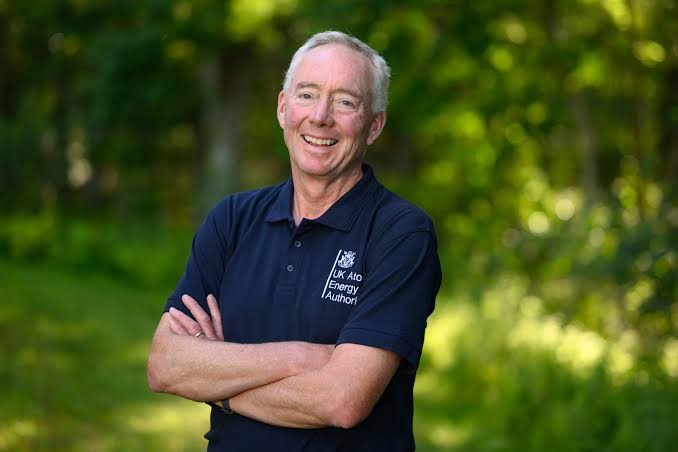 Dennis Whyte
Shaunavon Standard
A Shaunavon native who has built an extraordinary career in science, engineering and fusion energy has added another remarkable achievement to his resume.
Dennis Whyte, a former Shaunavon High School graduate who continues to have strong family ties to the community, has been named the new CEO of the United Kingdom Atomic Energy Authority (UKAEA).
The appointment was announced earlier this month by the United Kingdom’s Ministry of Energy following an international recruitment process.
UKAEA is the British government’s organization responsible for research and development aimed at making fusion energy a practical, sustainable source of power.
Whyte, who has been living in the Boston area and working at the Massachusetts Institute of Technology (MIT) for the past 20 years, will take over leadership of UKAEA at what is being described as a pivotal time for the fusion industry.
In his new role, he will oversee more than 2,600 employees working across four sites and provide leadership for the UKAEA Group, including the national laboratory and UK Fusion Energy Ltd.
Speaking with The Standard last week, Whyte said he was excited about the opportunity and the chance to build on the work he has been doing throughout his career.
Whyte has also been elected a visiting professor in the University of Oxford’s Department of Engineering Science.
“There is an exciting personal element to this as well,” he explained.
“Most people are familiar with the reputation of Oxford University – it is one of the world leaders.”
“It’s an amazing university, and I will be able to keep a link with students and teaching,” he added, “Hopefully, I can continue to help inspire young people to look towards science and innovation.”
Whyte said the new position represents an opportunity to bring together many of the elements that have defined his career – scientific research, engineering, education, entrepreneurship and commercialization.
“It’s an amazing fit for me,” Whyte said of his new job. “It’s an extension and an amplification of the work I have been doing here (at MIT).”
“One of my tasks will be to continue the trend of bringing great ideas and great technologies into companies,” he added.
Whyte’s mandate will include advancing fusion research and development, strengthening international and industry partnerships, developing commercial pathways for fusion energy and turning scientific breakthroughs into practical applications.
He will also be working with scientists, companies and other organizations around the world, including Canada. In fact, the new position will entail a significant uptick in interactions with Canada’s fusion efforts.
Another major part of his responsibility will be helping guide UKAEA through that next phase of its development.
Whyte said the sheer size of the organization is difficult to comprehend from the perspective of his hometown.
“It’s hard to image, but with 2,600 people, it is something bigger than all of Shaunavon, and all of them are scientists and technicians working on fusion,” he said.
The appointment comes as the United Kingdom makes a major commitment to the future of fusion energy. In 2025, the British government announced a record £2.5-billion ($4.7-billion) investment in fusion research, development and innovation over five years to 2030 as part of its Industrial Strategy.
Whyte described the timing of his appointment as significant.
“It’s a historic opportunity,” he said. “It is the biggest fusion organization and one of the leading research organizations in the world,” he stated.
Whyte brings an impressive international resume to his new job.
His career, however, is rooted in lessons that began much closer to home.
Reflecting on his education and upbringing in Shaunavon, he said the people who helped him along the way provided much more than an academic foundation.
“I had incredible tutoring along the way from my school days in Shaunavon, the University of Saskatchewan, and beyond that. And it wasn’t just learning about science, it was life lessons about values, hard work and working with people. Those things all remain with me to this day.”
After graduating from Shaunavon High School, Whyte went on to obtain his Bachelor of Engineering degree from the University of Saskatchewan. He later earned his PhD from the Université du Québec.
He worked at the DIII-D National Fusion Facility for a decade and served as a senior lecturer at the University of California, San Diego. He was an assistant professor in the Nuclear Engineering department at the University of Wisconsin-Madison from 2002 to 2006.
Whyte joined MIT in 2006 and served as MIT Nuclear Science and Engineering Department Head from 2015 to 2019. He also became the Director of the MIT Plasma Science & Fusion Center.
During his career at MIT, he led and contributed to research in several areas considered critical to the future of fusion energy. He has published more than 390 papers and articles and was one of the founders of the SPARC project, a collaboration between Commonwealth Fusion Systems and MIT’s Plasma Science & Fusion Center.
Whyte also co-founded Commonwealth Fusion Systems in 2018 as an MIT spinout focused on commercializing fusion technology developed through university research. He remains involved with the company, which has raised approximately $4 billion in capital funding since its launch.
In 2024, he co-founded Rutherford Energy Ventures, which applies economic and investment frameworks developed through his MIT research.
Throughout his career, Whyte has emphasized the importance of connecting scientific research with entrepreneurship and commercial development.
In his new role, Whyte will lead an organization with more than 70 years of experience in fusion research.
UKAEA’s Culham Campus, located near Oxford, has become a world-leading centre for fusion research and innovation. The organization played a major role in the development and operation of the Joint European Torus (JET), which operated at Culham for more than 40 years and set numerous world records in fusion research.
Until the end of 2023, JET was one of the world’s largest facilities to successfully demonstrate sustained fusion at high power using deuterium and tritium, the fuel used in future fusion power plants.
UKAEA is also responsible for developing the next generation of scientists, engineers and technical specialists needed to maintain the United Kingdom’s position as a global fusion leader.
Another major component of the organization’s future is the STEP program.
UK Fusion Energy Ltd., established as a UKAEA subsidiary in November 2024, has been given responsibility for delivering STEP – Britain’s program to design and build a prototype fusion power plant at West Burton in Nottinghamshire. The facility is intended to demonstrate the production of net-positive energy.
Michael Shanks, the UK’s Minister of State for Energy, welcomed Whyte’s appointment.
“I am delighted to welcome Professor Dennis Whyte as the new CEO of UKAEA,” Shanks said in a news release.
He noted that Britain is already a world leader in fusion research and innovation and said Whyte’s expertise would help strengthen that position while supporting skilled jobs, innovation and economic growth.
UKAEA Chairman Bernard Taylor said Whyte emerged as the strongest candidate following what he described as a broad international search.
“The board and I are delighted that Professor Dennis Whyte will become UKAEA’s next CEO in the autumn,” stated Taylor.
Taylor highlighted Whyte’s experience in both scientific research and commercializing new technology, pointing specifically to his role in helping create one of the world’s largest private-sector fusion companies as an MIT spinout.
He said Whyte’s understanding of the scientific, engineering and commercial challenges facing fusion will be an important asset as UKAEA enters its next phase.
For Whyte, the move to England represents both a professional challenge and another chapter in a career that has taken him from southwest Saskatchewan to the forefront of one of the world’s most ambitious scientific fields.
And there may be one more attraction to the move.
“Of course there will be some golf involved,” chuckled the former Shaunavon resident, who loves to play the game whenever he can and is excited about the opportunity to test some of the world-class golf courses in the United Kingdom.
Whyte still regularly returns to Shaunavon, where he makes sure to play golf with his father, Russell, who continues to live in the community.
Russell, 88, still plays the game and routinely shoots under his age.
Leave a Reply
You must be logged in to post a comment.